Your Brain Is Basically a Slot Machine: The Real Reason You Can't Quit Randomized Games
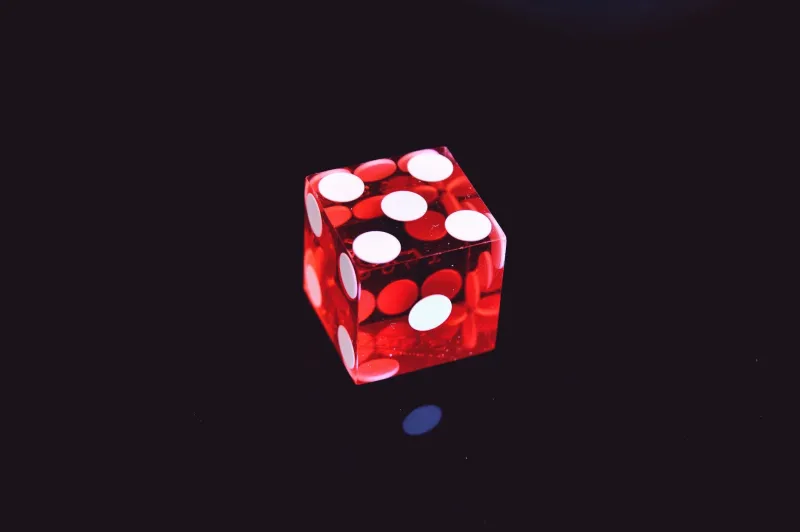
Let's set the scene. You've been at it for two hours. You're tired. You told yourself you'd stop after the last run. The run ended badly — some janky item combo, a boss that felt unfair, maybe just bad luck. And yet somehow, your hand is already hovering over the 'play again' button.
This isn't a you problem. Well — it kind of is, but only because you're human.
What's happening in those moments has less to do with enjoying the game and way more to do with how your brain is wired to chase unpredictable outcomes. Randomized games — roguelites, loot-based shooters, live service titles with rotating rewards — aren't just fun. They're architecturally designed to exploit one of the oldest reward circuits in your nervous system. And once you understand how it works, you'll never look at your 'one more run' habit the same way.
The Science of Not Knowing What You're Going to Get
Here's the core thing: your brain doesn't reward you for getting something good. It rewards you for anticipating that you might.
This is the variable reward schedule, and neuroscientists have been studying it since the 1950s when B.F. Skinner noticed that lab rats pressed levers far more obsessively when rewards came randomly rather than consistently. A lever that always gives a pellet gets boring fast. A lever that sometimes gives a pellet? The rat won't stop.
You are the rat. The roguelite is the lever. I say this with full love and zero judgment because I am also the rat.
Dopamine — the neurotransmitter everyone talks about like it's a happiness chemical — actually spikes hardest not when you receive a reward, but when you're in the uncertain window right before you find out if you're getting one. That moment where the item room loads and you don't yet know what's inside? Peak dopamine. The moment you see it's something mediocre? Drop-off. The moment it's something incredible? Huge spike — but shorter than you'd expect.
The anticipation is the drug. The result is almost secondary.
Why Randomness Hits Different Than Predictable Design
Think about a game with a linear reward structure — you do X, you get Y, every time. It's satisfying in its own way, but your brain calibrates to it quickly. You know what's coming. The mystery is gone. Your nervous system files it under 'fine' and starts looking for stimulation elsewhere.
Now think about something like Hades, Dead Cells, or Balatro. Every single run is a negotiation with chaos. The boons you're offered, the enemies that show up, the relics available in shops — all of it shifts. You might stumble into a build so broken and synergistic that you feel like a genius. You might get absolutely cooked by a combination of bad luck and one unlucky corridor. Either way, the next run could be totally different.
That unpredictability is the whole game. And your brain never gets a chance to settle into 'I know what's coming' mode, which means it never fully disengages.
Live service games have figured this out on an industrial scale. The weekly reset in something like Destiny 2, the rotating shop in Fortnite, the randomized daily challenges in Apex Legends — these aren't just content features. They're engineered re-engagement hooks. Every time the calendar ticks over, there's a new uncertain outcome waiting, and your brain treats it like a fresh spin.
The 'Bad Run' Paradox
Here's where it gets really interesting: a terrible run might actually make you more likely to play again, not less.
When you lose in a randomized game, your brain doesn't fully accept that the outcome was inevitable. It generates a story: the items were bad this time, the layout was rough this time, you made one decision that snowballed this time. There's always a this-time. And this-time implies a next-time where things could go differently.
Compare that to losing in a game with fixed design. If you fail the same level three times in a row, eventually you start to question whether you're actually capable of passing it. The loss feels structural. But in a randomized game, the loss feels circumstantial. The next run is a clean slate. A new deal. Another shot at the jackpot.
That psychological reset is enormously powerful. It keeps the hope alive in a way that predictable failure just can't.
What Game Designers Know That We Don't
The best roguelite designers aren't just making chaotic experiences and hoping for the best. They're carefully tuning how random the randomness actually feels.
There's a concept called 'controlled variance' — the idea that while outcomes appear random, the underlying systems are nudging things toward experiences that feel fair-ish. Slay the Spire doesn't just throw cards at you arbitrarily; it tracks what you've been offered and adjusts. Hades has pity systems baked in so that certain upgrades don't stay out of reach forever. The randomness is real, but it's not pure chaos — it's chaos with guardrails designed to keep you in the sweet spot between frustration and triumph.
That sweet spot is sometimes called 'the flow state,' and when randomized games nail it, you don't just want to keep playing — you feel like you have to. The next run is always theoretically beatable. The perfect build is always theoretically one room away.
So What Do You Do With This Information?
Honestly? I'm not here to tell you to stop. These games are genuinely fun, and there's nothing wrong with loving the loop. But knowing what's driving the 'one more run' impulse can actually help you engage with it more intentionally.
Set a timer before you start a run, not before you start the session. That way the end condition is the run finishing, not some arbitrary clock you'll ignore anyway. Notice when you're playing from curiosity versus playing from compulsion — they feel different if you pay attention. Curiosity feels light. Compulsion feels a little frantic, a little hollow.
And sometimes? Just honor the loop. Some nights your brain wants the variable reward hit and that's genuinely fine. You're not broken for loving randomized games. You're just a human being with a dopamine system that hasn't updated its firmware since the Stone Age.
The games know that. Now you do too.
Play smart, play aware — and hey, maybe just one more run.