Cozy Games Aren't 'Easy' — They're Exactly What Your Brain Has Been Asking For
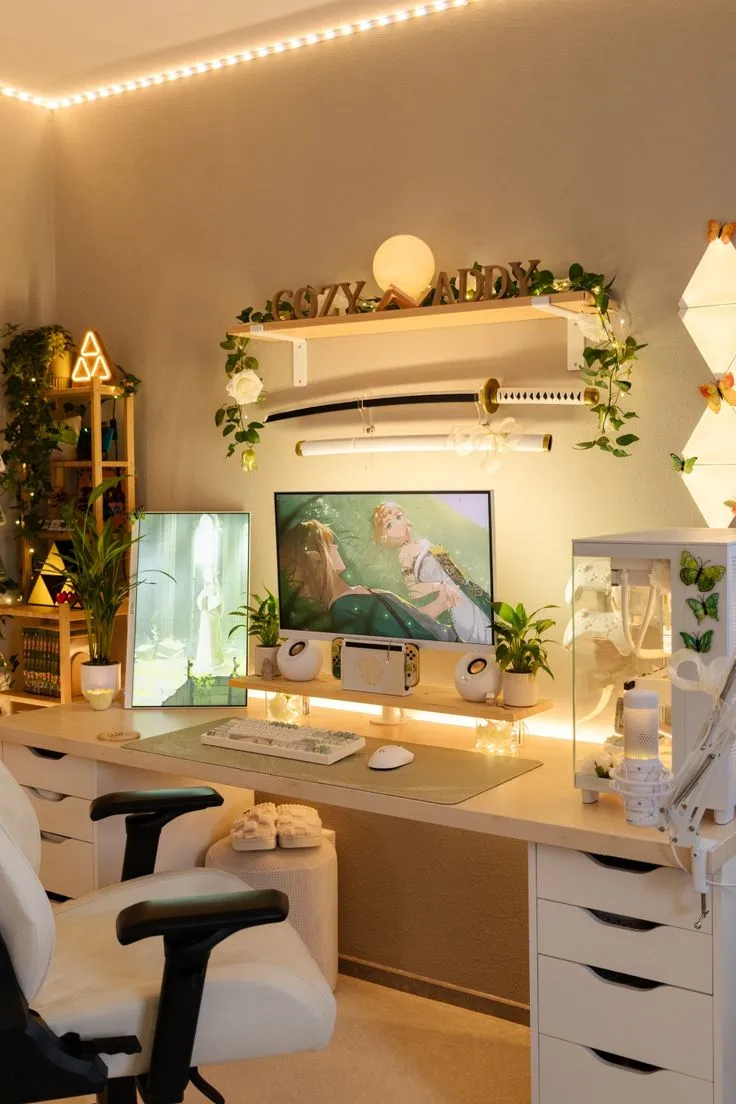
Photo: cozy aesthetic gaming setup with warm lighting plants and pastel colors, via i.pinimg.com
Somewhere along the way, gaming culture decided that difficulty equals value. That if a game doesn't punish you, stress you out, or demand 200 hours of grinding to unlock anything meaningful, it's somehow lesser. It's a take that's aged about as well as dial-up internet.
Cozy games — the low-stakes, atmosphere-drenched, usually-involves-farming-or-fishing category of games — have quietly become one of the most beloved corners of the gaming world. And if you've been sleeping on them because you thought they were "too chill," I'm here to tell you that you've been missing out on something genuinely special.
So What Even Is a Cozy Game?
The term is a little loose, which is part of its charm. Cozy games generally share a few traits: there's no fail state (or a very forgiving one), the pace is player-controlled, the aesthetic tends toward warm colors and soft visuals, and the emotional tone is... gentle. You're not fighting for survival. You're planting carrots, befriending villagers, decorating your cottage, or wandering through a quiet forest collecting mushrooms.
Think Stardew Valley, Animal Crossing: New Horizons, Unpacking, A Short Hike, Spiritfarer, Coral Island, or the more recent Moonstone Island. These games aren't trying to spike your cortisol. They're doing the opposite.
The Burnout Factor Nobody's Talking About
Here's what's actually driving the cozy game boom, and it's not just aesthetics: competitive gaming burnout is real, it's widespread, and it's pushing a lot of players toward something quieter.
Spend enough time in ranked lobbies — whether that's Valorant, League of Legends, Apex Legends, or any other competitive title — and the experience starts to feel less like fun and more like a second job with worse management. There's pressure to perform, teammates who may or may not be having a great day (they're usually not), and a reward loop built almost entirely around tension and release.
That cycle works for a while. Then it doesn't. And when it stops working, a lot of players don't quit gaming — they pivot. They find something that lets them engage without the stakes.
Cozy games fill that gap perfectly. They're engaging without being demanding. You can make meaningful progress in 20 minutes or three hours. You can put them down mid-session without losing anything. That flexibility isn't a design flaw — it's a feature.
The Mental Health Case Is Actually Pretty Solid
Let's talk about what's happening in your brain when you play something like Stardew Valley for an hour. You're in a low-threat environment, making small decisions with satisfying immediate feedback (plant seed, water seed, watch seed grow), and experiencing a sense of progression that doesn't require you to outperform anyone else.
Psychologists who study gaming have noted that low-arousal games — the technical term for what we're calling cozy — can help reduce anxiety, provide a sense of control during stressful periods, and support emotional regulation. There's something almost meditative about the repetitive, rewarding loops in these games. It's not unlike the appeal of adult coloring books or knitting. Your hands are busy, your brain is gently engaged, and the noise of the day gets a little quieter.
This isn't to say cozy games are therapy. They're not. But as a tool for unwinding? They're genuinely effective in a way that a high-octane shooter rarely is.
"But Are They Actually Games?" Yes. Stop.
The gatekeeping around cozy games is exhausting and, honestly, kind of embarrassing at this point. The argument usually goes: "They're too easy. There's no challenge. Anyone can finish them."
A few things about that.
First, difficulty is not the only metric of a meaningful experience. Unpacking — a game where you literally unpack boxes and arrange items in a home — tells a quietly devastating story about a person's life through the objects they own. There's no combat. There's no fail state. It's also one of the most emotionally resonant games of the last decade.
Second, cozy games can have real depth. Stardew Valley has a full-blown farming economy, relationship systems, mine combat, and seasonal time management. Spiritfarer deals with grief in a way that will genuinely wreck you if you let it. These aren't shallow experiences. They're just not wearing their complexity on their sleeve.
Third — and this might be the most important point — fun doesn't require suffering. If a game makes you happy, it's doing its job.
Where to Start If You're Cozy-Curious
If you've never played in this genre and want to dip your toes in, here are a few entry points depending on your vibe:
- If you like structure and progression: Stardew Valley ($14.99 on Steam) is the gold standard. It's endlessly replayable and has one of the most passionate communities in gaming.
- If you want something short and beautiful: A Short Hike ($7.99) takes about two hours and is one of the most purely joyful gaming experiences available.
- If you want to cry in the best possible way: Spiritfarer (also on Game Pass) is about helping spirits pass on. It's gorgeous and will absolutely get you.
- If you're into world-building and chill exploration: Coral Island is a newer Stardew-adjacent game with a diverse cast and a lush tropical setting that's been winning fans fast.
- If you just want vibes with zero pressure: Animal Crossing: New Horizons on Switch remains the ultimate low-stakes hangout game, especially if you have friends who also play.
The Bigger Picture
Cozy games aren't a trend that's going to fade out. They're a response to something real — the overstimulation of modern life, the pressure of competitive play, and a genuine desire for gaming experiences that restore rather than deplete.
Playing them doesn't make you a casual gamer. It makes you someone who knows what you need and isn't embarrassed to go get it.
So the next time someone gives you grief for spending a Sunday afternoon tending your virtual farm instead of grinding ranked, just remember: your cortisol levels are lower, your in-game crops are thriving, and you're having a genuinely good time.
That's kind of the whole point.


