Break Your Own Rules: Why Playing Games Terribly on Purpose Is the Most Fun You'll Have All Year
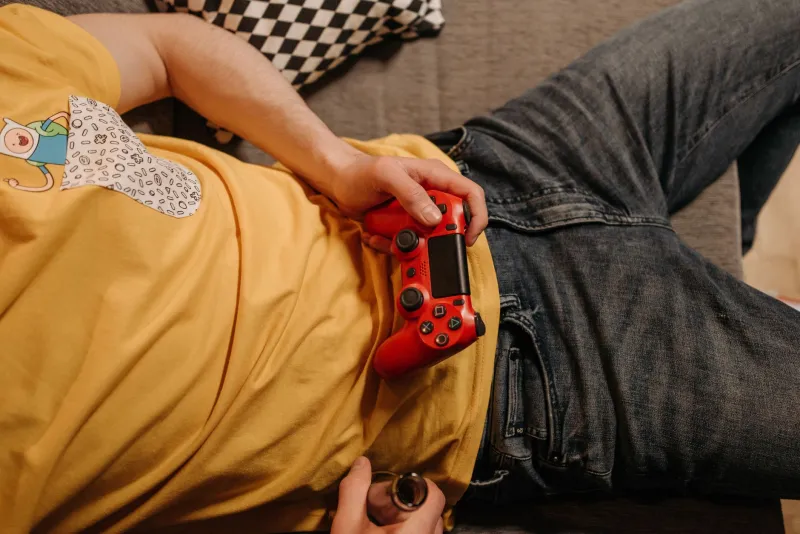
Here's a scenario. You've been grinding the same game for weeks. You know the meta. You know the optimal build. You know exactly which skills to stack and which enemies to cheese. And somehow — somehow — it's never felt more boring.
Yeah. We've all been there.
So what if the fix isn't finding a new game? What if it's just... deciding to be genuinely, spectacularly bad at the one you already have?
I know that sounds unhinged. Stick with me.
The Performance Trap Nobody Talks About
There's this quiet pressure that creeps into gaming the longer you play. You start optimizing. You start watching guides. You start feeling weirdly guilty when you're not playing "correctly." It stops being play and starts feeling like a job you didn't apply for.
Psychologists call this kind of anxiety ego depletion — when the mental energy you spend monitoring your own performance actually drains the enjoyment right out of an activity. In gaming, it shows up as the moment you stop experimenting and start executing. You're not discovering anymore. You're just executing a script.
Intentional failure is the cheat code nobody put in the manual. When you decide to play badly, you hand the pressure a pink slip. There's nothing to protect. No win streak. No KD ratio. No judgment. Just the pure, chaotic joy of seeing what happens when you remove the guardrails entirely.
What "Playing Badly" Actually Looks Like
Before you roll your eyes, let's get specific, because intentional failure is way more creative than just mashing buttons and hoping for the best.
Self-imposed restrictions are probably the most popular flavor. Think: no healing items in a Soulslike, or completing a Pokémon run using only one type. The Nuzlocke challenge — where a fainted Pokémon is considered permanently dead — has been around for over a decade specifically because adding your own rules to a game you've already "beaten" turns it into something almost unrecognizable.
Wrong-tool-for-the-job runs are another absolute gem. Playing a stealth game like a full-frontal action brawler. Using a sniper rifle exclusively in close quarters. Trying to speedrun a game that's clearly designed to slow you down. It sounds painful, but there's a weird creative problem-solving energy that kicks in when you're forced to make terrible tools work.
Upside-down or alternate controller setups are chaotic in the best way. Flipping your controller, swapping your analog sticks, or playing an FPS with a Guitar Hero controller (yes, people do this) forces your brain to relearn muscle memory it spent hundreds of hours building. It's genuinely humbling — and genuinely hilarious.
Pacifist or anti-meta builds in competitive games are secretly genius. Picking the lowest-tier character and actually learning them deeply often teaches you more about a game's systems than running the meta ever could.
Why Your Brain Actually Loves This
Here's the counterintuitive part: your brain is wired to find novelty rewarding. When you play optimally, you're basically running a familiar route over and over. Efficient, sure. Exciting? Not so much.
But the moment you introduce a weird restriction or a deliberately bad strategy, suddenly everything is a problem to solve again. The dopamine hits start flowing the same way they did when you first picked up the game. You're not grinding anymore — you're exploring.
There's also something deeply freeing about removing the stakes entirely. When you're trying to fail in creative ways, nobody can judge you for failing. You've already given yourself permission. And that permission? It's the thing that makes experimentation feel safe enough to actually try.
Gaming researchers have noted that "sandbox" behavior — playing without a clear objective — is one of the most consistently reported sources of player enjoyment. Intentional failure is basically a DIY sandbox mode you can drop into any game you own.
The Community Side of This Is Wild
If you think this is a solo weirdo activity, let me introduce you to the entire ecosystem built around it.
The speedrunning community has whole categories dedicated to "glitchless" or "low percent" runs — deliberately avoiding tools that make the game easier. Twitch has entire channels dedicated to challenge runs. The "iron man" style of play (no saves, no reloads, one life) has spawned massive communities across games like XCOM, The Long Dark, and Minecraft.
And then there's the casual side — friends who set dumb house rules before firing up Mario Kart, or streamers who let their chat vote on which terrible choice they make next. Some of the most-watched gaming content on the internet is literally just people playing badly in creative ways. There's a reason "chaos runs" go viral.
If you're building a gaming community — whether it's a Discord, a Twitch channel, or just a group chat — challenge runs and self-imposed rules are incredible for engagement. Everyone has an opinion on the rules. Everyone wants to watch the train wreck. It becomes a shared experience in a way that watching someone play optimally almost never does.
How to Actually Start Doing This
You don't need to go full speedrun-any-percent energy on day one. Start small.
Pick a game you already know well — that's important. You want the baseline familiarity so the restrictions actually feel meaningful rather than just confusing.
Then give yourself one rule. Just one. No fast travel. Only melee weapons. Never use the map. Complete a level without jumping. Whatever sounds slightly annoying and kind of funny. That's your sweet spot.
Tell someone about it. Seriously. Even just posting it in a Discord server or mentioning it to a friend makes it feel like an event instead of just a Tuesday. Accountability (even low-stakes accountability) makes the whole thing more memorable.
And when it all falls apart spectacularly? That's not failure. That's the whole point.
The Real Flex Is Letting Yourself Be Bad
We live in a culture that's obsessed with optimization — in work, in fitness, in how we spend every fifteen-minute window of our day. Gaming, for a lot of us, started as the one place that didn't require that energy. Somewhere along the way, the leaderboards and the meta and the "correct" way to play crept in and made it feel like everything else.
Playing badly on purpose is a little act of reclamation. It's saying: I'm here to play, not to perform. And honestly? Some of the most memorable gaming moments I've ever had came from runs that went completely sideways in the most creative ways possible.
So the next time a game starts feeling stale — before you uninstall it or drop $70 on something new — flip the script. Give yourself a dumb rule. Make it hard in the wrong way. See what happens.
You might just fall in love with it all over again.