Your Save File Is Basically a Diary: What Your Gaming Choices Say About the Real You
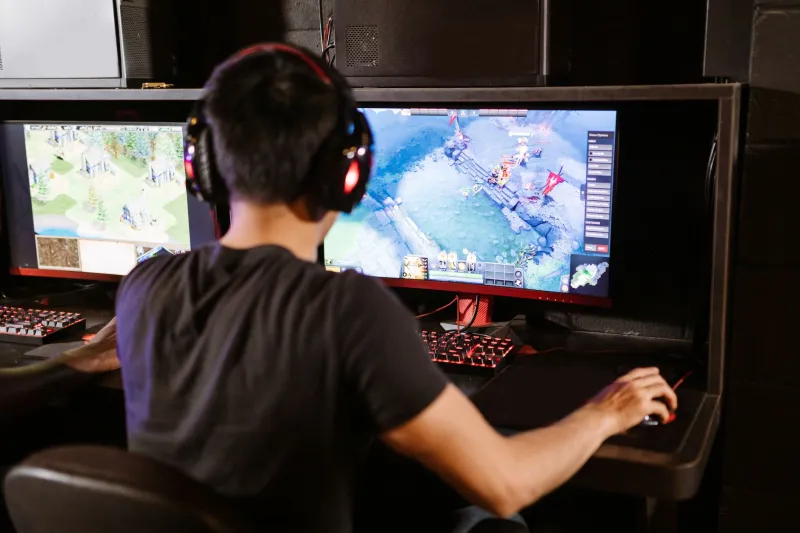
Here's something kind of wild to sit with: you have probably never written a single word in a journal, but your gaming habits have been logging your inner life for years. Every decision you make inside a game — the class you pick, the quests you skip, the difficulty you quietly lower at 1 AM when no one's watching — adds up to a portrait of you that's surprisingly honest.
And unlike an actual diary, you can't edit it. The save file doesn't lie.
The Difficulty Slider Tells on You Immediately
Let's start at the beginning, because the very first screen a lot of games throw at you is the one that asks how hard you want this to be. And the choice you make there? It's not really about skill. It's about what you're actually looking for.
Players who crank it up to the hardest setting right away tend to be chasing something specific — usually a sense of earned accomplishment, the kind that's hard to find outside the game. Research in motivational psychology points to this as a need for what's called mastery, the drive to get genuinely good at something and feel it. If your life feels chaotic or out of your control, a punishing game can paradoxically feel like solid ground. You know exactly what the rules are. You know what winning looks like.
On the flip side, someone who picks easy mode — without shame, without hesitation — is often someone who knows exactly what they came for. They want the story. The world. The vibe. They're not here to prove anything, and honestly? That kind of self-awareness is underrated.
The most interesting group, though, is the people who start on medium and then quietly drop the difficulty mid-game. That's not weakness. That's adaptation. And it usually means something shifted — in the game or in their week.
Your Character Build Is Your Alter Ego
If you've ever spent forty-five minutes in a character creator before playing a single second of actual gameplay, you already know that building a character is personal. But it goes deeper than aesthetics.
People who consistently build sneaky, rogue-style characters — the ones who pick pockets and avoid direct confrontation — often describe themselves as people who feel overlooked in real life. The fantasy of being unseen but powerful, of moving through the world without being tracked, hits different when you spend your days feeling invisible at work or loud in rooms that don't want your input.
Warriors and tanks, the people who just want to stand in the middle of the fight and absorb everything? Those players are often caretakers in their offline lives. Parents, older siblings, the friend everyone calls first. They're used to being the buffer. In a game, at least, that role comes with armor.
Healer mains in multiplayer settings are their own fascinating category. There's a well-documented pattern of healer players being highly empathetic, sometimes to a fault. They get genuine satisfaction from keeping others alive, even in a fictional context. Ask a healer main how they feel when their team dies despite their best efforts and watch their face. That's not just game frustration. That's something they've felt before.
The Hoarder Save File vs. The YOLO Playthrough
Open someone's inventory in almost any RPG and you'll learn something about how they relate to scarcity. The player with seventeen healing potions they refuse to use, even when they're dying, is holding onto resources the same way some people hold onto money, relationships, or opportunities — convinced that the right moment to spend them will come, even as the final boss approaches.
This is genuinely a documented psychological phenomenon. It's called resource hoarding in behavioral economics, and it shows up in games constantly. Players save the good stuff for a scenario that never comes, and then the game ends with a full inventory. Sound familiar outside of gaming? Yeah.
Contrast that with the player who blows their best items on the second dungeon and figures they'll find more. That's not recklessness — that's a fundamentally different relationship with abundance and trust. Those players tend to be more comfortable with uncertainty in general. They've made peace with not having a backup plan.
What Multiple Save Slots Actually Mean
Some people have one save file. One. They commit, they move forward, they don't look back. These players tend to be decisive in ways that other people find either impressive or slightly alarming. They've thought about the choice, they've made it, and they're not interested in second-guessing.
Then there are the people with fifteen save slots, each one labeled something like "before big choice" or "just in case." These players are managing anxiety in a space where managing anxiety is actually possible. Real life doesn't let you reload. Games do. And for someone who struggles with the permanence of decisions — a job change, a hard conversation, a relationship call — having that rollback option available is genuinely comforting, even if they never use it.
Neither approach is wrong. But they're both telling.
The Quests You Skip Say Just as Much as the Ones You Do
Here's the part people don't think about as often: the stuff you avoid in games is just as revealing as the stuff you pursue. Players who skip every romance subplot aren't necessarily uninterested in connection — sometimes they're protecting themselves from something that hits too close. Players who grind side quests for hours before touching the main story might be someone who does the same thing with their inbox, their to-do list, their actual life goals.
And the players who explore every corner of the map before progressing? Completionists aren't just thorough. They're often people who feel deeply uncomfortable moving forward without certainty, without knowing what's around every corner. The open world isn't just a playground for them. It's a space where they can feel prepared.
So What Do You Do With All This?
Honestly, nothing has to change. Knowing that your rogue build is your introverted power fantasy or that your hoard of potions maps to a real-world fear of scarcity doesn't mean you need to overhaul how you play. Games are one of the few places where you get to be exactly who you are without consequence.
But it's kind of beautiful, isn't it? That in the middle of a dungeon or a crafting menu or a character creator, you're leaving little traces of yourself everywhere. Your save file is doing what journals, therapy, and late-night conversations are all trying to do — figure out what you actually want, what you're afraid of, and what you're still working through.
Next time you boot up your game, take a second before you skip past the opening screen. Notice what you reach for first. It's probably not random.
Neither are you.