Stop Apologizing for Playing: How to Ditch the Guilt and Actually Enjoy Your Games
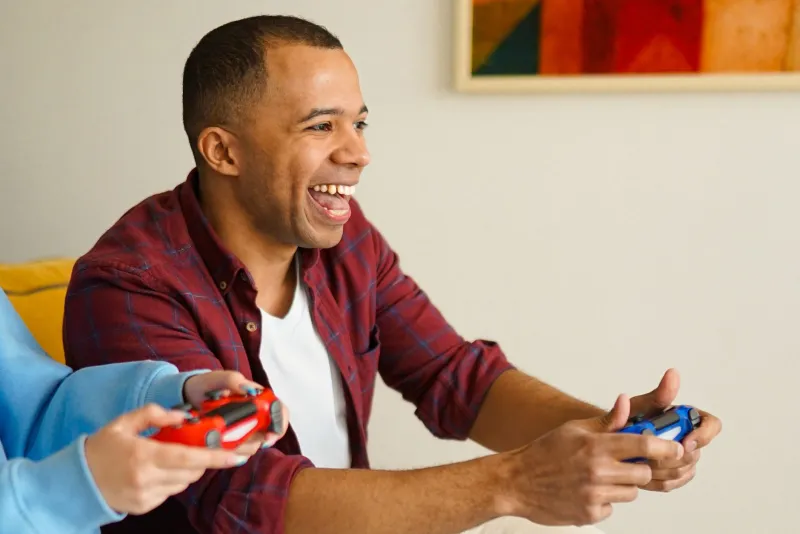
You're two hours into a session. The vibe is good, the run is going well, and then — out of nowhere — it hits. That little voice. Shouldn't you be doing something else right now? Maybe you've got laundry piling up, a work email you haven't answered, or just some vague sense that sitting here, controller in hand, is somehow... wrong.
Welcome to gaming guilt. It's real, it's annoyingly common, and it's quietly ruining a lot of perfectly good play sessions for people who absolutely deserve to be having fun.
Let's talk about where this feeling comes from, why it shows up the way it does, and — most importantly — how to stop letting it run the show.
Where Does the Guilt Even Come From?
Here's the thing: gaming guilt didn't appear out of thin air. It's the product of some pretty deeply baked cultural messaging, especially in the US where productivity has basically been elevated to a personality trait.
Grind culture is everywhere. The idea that your worth is tied to your output — your hustle, your side projects, your optimized morning routine — has seeped into almost every corner of American life. And when you're sitting on the couch playing Stardew Valley or grinding ranked matches, the brain starts doing math it was never asked to do: Is this productive? Am I wasting time? What could I be accomplishing right now?
Family dynamics play into it too. A lot of us grew up hearing some version of "go outside" or "put that down and do something useful." Those messages don't just evaporate when you turn 25. They get stored somewhere, and they resurface every time you pick up a controller as an adult.
And then there's the cultural narrative around gaming itself. Despite the industry being worth hundreds of billions of dollars and gaming being one of the most popular leisure activities in the country, it's still treated — in a lot of mainstream conversations — like a juvenile hobby. Movies, TV, even casual comments from coworkers can carry this subtle implication that gaming is something you should eventually grow out of.
So no, you're not being oversensitive. The guilt has sources. It's just that those sources are wrong.
How It Shows Up Differently Across the Community
One thing worth noting is that gaming guilt doesn't hit everyone the same way — and understanding that actually matters for how you deal with it.
For some players, it's tied to time. They feel fine playing for 30 minutes but start spiraling if a session stretches past an hour. The guilt is almost clock-based, like there's an invisible timer running in the background counting down to the moment gaming becomes "too much."
For others, it's genre-specific. Cozy games or slower-paced titles tend to trigger more guilt than action-packed or competitive ones — probably because they feel more overtly "lazy" even though they're not. Nobody bats an eye at you watching a two-hour movie, but somehow spending the same amount of time in Animal Crossing feels like a confession.
There's also a social layer to it. Multiplayer gamers sometimes feel the guilt less because they can frame gaming as connection — you're playing with people, which feels more justifiable. Solo players don't always have that buffer. It's just you and the game and your own brain telling you to go be productive.
And for women and non-binary folks in gaming spaces? The guilt often comes with an extra layer of external judgment — a sense that you have to justify your presence in gaming at all, which makes the internal guilt hit even harder.
The Mental Shift That Actually Helps
Okay, so here's where we stop diagnosing and start actually doing something about it.
The biggest reframe that tends to stick is this: rest is not the absence of productivity. Rest is what makes productivity possible. Your brain needs downtime. Not sleep-downtime — actual, engaged, enjoyable downtime. And gaming, done intentionally, is one of the most effective forms of that kind of rest that exists.
Studies on leisure and cognitive recovery consistently show that activities you find genuinely engaging — not just passively consuming, but actively participating in — do more to restore mental energy than just sitting quietly. Gaming fits that description almost perfectly. You're problem-solving, reacting, making decisions, building skills. Your brain is doing real work, just work that feels good.
Another shift worth making: stop treating fun like something you have to earn. This one is harder because it runs counter to so much of the messaging we absorb. But fun isn't a reward for finishing your to-do list. It's a basic human need. You don't have to hit a productivity quota before you're allowed to enjoy something.
Practical Ways to Quiet the Noise
Beyond the mental reframing, there are some actual habits that help take the edge off gaming guilt in the moment.
Name it when it shows up. Seriously — just noticing and labeling the feeling as "oh, that's gaming guilt" creates a little distance between you and the spiral. You're not bad at adulting. You're just playing a game.
Set intentional play sessions instead of drifting into them. Guilt tends to be louder when gaming feels accidental — like you just sort of ended up on the couch for three hours. When you decide ahead of time that you're going to play from 7 to 9 PM, it feels more like a plan and less like avoidance.
Stop explaining yourself. You don't owe anyone a justification for how you spend your leisure time. Every time you preface gaming with "I know I probably should be doing other stuff, but..." you're reinforcing the idea that it needs defending. It doesn't.
Find your people. This is where community genuinely helps. Being around other adults who game without apology — whether that's a Discord server, a local group, or just following creators who treat gaming as the legitimate hobby it is — normalizes it in a way that's hard to manufacture on your own.
You're Allowed to Be Here
Here's the bottom line: gaming is not a guilty pleasure. It's just a pleasure. The guilt is a borrowed feeling — picked up from cultural narratives that were never really about you or your wellbeing in the first place.
You don't have to hustle every hour. You don't have to justify your downtime. And you definitely don't have to pause mid-session to feel bad about something that's actually doing you good.
Play the game. Enjoy the run. And when that little voice pipes up? Tell it Rae sent you, and you're busy having fun.